



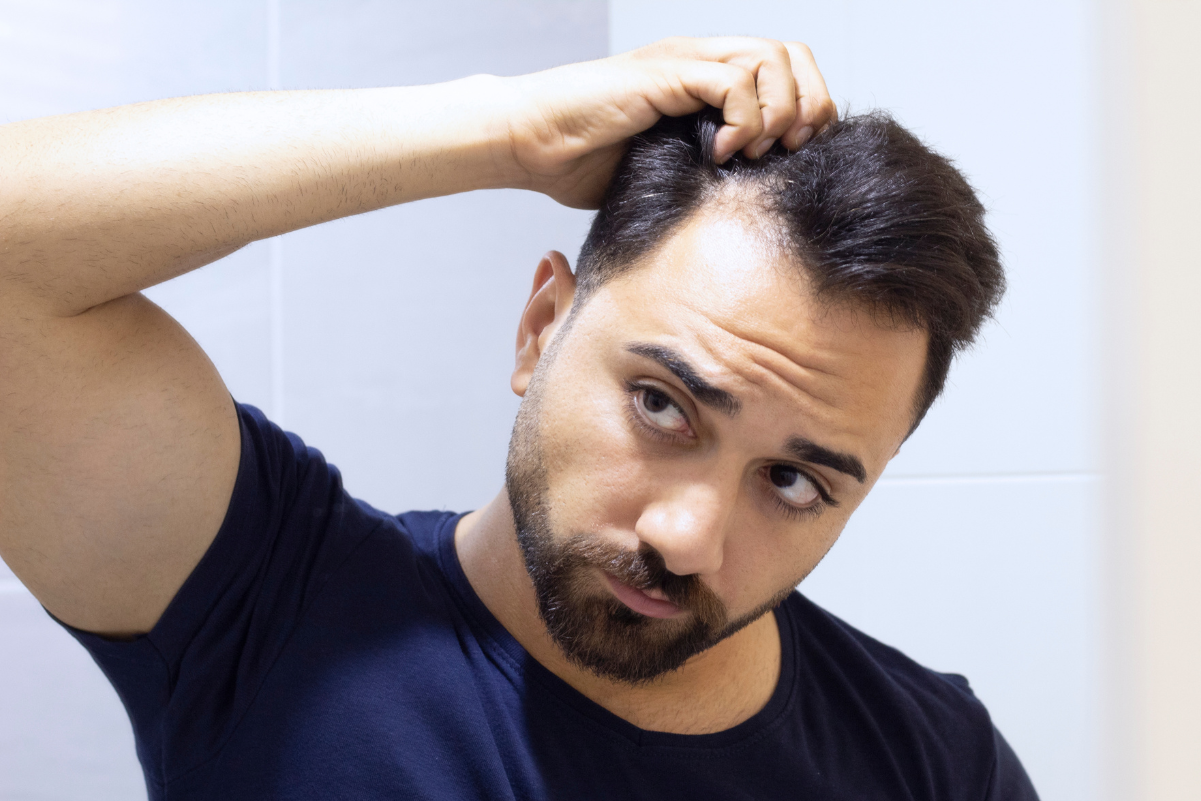
Hair thinning or “hair loss” is extremely common. It affects approximately 80 million people in the United States alone. Hair thinning can carry a significant psychosocial burden. Patients with moderate to severe hair loss have higher rates of anxiety, depression, and a reduced quality of life. Hair loss or thinning can encompass increased shedding, thinning part lines, receding hair lines, and bald patches.
Common Causes of Hair Thinning
Hair thinning, in both males and females, can result from a variety of genetic, hormonal, nutritional, and life-style related factors. Two of the most common causes of hair loss include androgenic alopecia and telogen effluvium. Androgenic alopecia (androgenetic alopecia) affects approximately 50% of men and 30% of women throughout their lifetimes and is commonly known as male-pattern baldness or female-pattern baldness or hair loss. While it is the most common cause of hair thinning, androgenic alopecia is largely influenced by genetics and hormones. Pattern hair loss can begin as early as ages 20 to 30 and gradually progresses over time. In females, it commonly presents as a widening of the part line, diffuse crown thinning, and bitemporal recession, while in males, we more commonly see a receding hairline and crown thinning.
Another common cause is telogen effluvium. This is a form of hair shedding that may be acute or chronic. It is often triggered by stressors - either physical or emotional including but not limited to surgery, illness, autoimmune conditions, emotional trauma, or rapid weight loss (including from GLP-1 medications). Hormonal fluctuations can also contribute to telogen effluvium in women, particularly during the postpartum period, menopause or with concomitant medical conditions such as thyroid disorders. Other causes of telogen effluvium include nutritional deficiencies such as iron deficiency anemia, low protein intake (including vegan diets), vitamin D deficiency, and zinc deficiency. The increase in hair shedding typically appears 2-3 months following the inciting event and typically results in resolution with about 80% of hair regrowth.
In addition, there are many other types of hair loss including alopecia areata and scarring alopecia, while less common, that are usually diagnosed and treated by dermatology providers.
Signs It May Be Time to See a Dermatology Provider
Not all hair loss is the same – and identifying the underlying cause is key to finding the right treatment options. As many different types of hair loss or hair thinning can appear similar in the early stages, an evaluation by a dermatology provider can help determine the cause and create a targeted treatment plan before the thinning progresses further.
It may be time to see a Dermatology provider if you experience:
-
Sudden shedding
-
Bald patches
-
Itching or scalp irritation
-
Widening part
-
Receding hair line
Symptoms involving the scalp skin itself – including itching, burning, tenderness, scaling, or irritation – should also not be ignored. Hair thinning accompanied by scalp inflammation can point toward inflammatory scalp conditions such as seborrheic dermatitis, psoriasis, or certain scarring alopecias that tend to be chronic and may worsen without treatment. The earlier the hair thinning is evaluated, the more efficacious treatment options may be.
How Do Dermatology Providers Diagnose Hair Thinning?
Diagnosing hair thinning is more complex than simply observing the scalp. Dermatology providers take a comprehensive and holistic approach to determine the underlying cause that will guide the most effective treatment plan. The first step is a thorough history. We will often ask what the onset of the hair thinning was, whether it came on suddenly or gradually, if you are noticing increased shedding, patchy hair loss, scalp symptoms, or changes in the texture/density of hair. In addition to personal history, family history of hair thinning is also important. We will often ask if there is a family history of hair thinning or baldness, as hereditary hair loss is extremely common. A detailed medical history is also essential, as many causes of hair loss are due to systemic diseases as well as medications used to treat certain conditions. Lastly, lifestyle factors and recent stressors are discussed in-depth as these are often key indicators into the potential cause of a patient's hair thinning.
Following a thorough history taking, we then closely examine the scalp and the hair. We will use a dermatoscope, a specialized magnifying device that allows them to examine hair follicles, scalp inflammation, scaling, miniaturization of hairs, and patterns of hair loss in greater detail. This can help distinguish between nonscarring and scarring forms of alopecia.
In some cases, a scalp biopsy may be needed to confirm the diagnosis, especially if there is a concern for inflammatory or scarring alopecia. A scalp biopsy is not necessary for every patient, however, it can be particularly useful and provide valuable information when the diagnosis is unclear or when more aggressive forms of hair loss are suspected.
Hair Thinning Treatment Options
Treatment for hair thinning depends on the specific diagnosis and patient characteristics. Options for androgenic alopecia include topical minoxidil as well as oral therapies including finasteride, minoxidil, dutasteride, and spironolactone. Telogen effluvium, while usually self-limited, may be helped by addressing certain underlying medical conditions or taking supplements (such as Nutrafol) which provide micronutrients, vitamins, and botanical ingredients that specifically support follicle health. A holistic approach encapsulates emphasis on a balanced nutrition rich in proteins, iron, and vitamins, alongside proper lifestyle modifications and scalp health maintenance through gentle cleansing routines, stress management, and protection from environmental damage to optimize treatment outcomes.
Hair thinning (or hair loss) is extremely common and affects millions of people. It can significantly impact one's quality of life and self-identity. Understanding the various causes and available treatment options for hair loss empowers patients to take proactive steps toward healthier scalp and hair. No matter the type of hair loss, early intervention is key to achieving the best possible outcome. A comprehensive approach that combines professional dermatologic evaluation with targeted treatments offers the greatest chance for success. Hair thinning is extremely individualized, thus, working with a qualified dermatology provider ensures that you receive a personalized treatment plan tailored to your specific needs and circumstances. If you’re noticing changes in hair density, shedding patterns, or worsening scalp health, schedule an appointment with us today – we are here to restore both your hair and your confidence!